WHY RAFAA CENTER · BAHAWALPUR
Why choose Rafaa Center?
The right psychological support begins with a clear conversation, not a promise of instant results. At Rafaa Center in Bahawalpur, visitors can learn which professionals work with children, adolescents and adults, when assessment may be useful, and how families can take an informed next step.
What should you know before choosing a psychology center?
A good decision is easier when the center is clear about who provides care, how assessment works, where family involvement fits and what happens when a concern falls outside a clinician’s scope.
Who is actually providing the care?
Rafaa separates clinical roles from management and legal advisory roles so visitors can understand who is responsible for psychological, developmental or speech-language support.
Is the concern understood before a plan is suggested?
Where assessment is appropriate, the aim is to understand patterns, functioning, developmental context and current needs before deciding what support may be useful.
Can the plan change when the needs change?
Support is shaped around age, goals, family context and professional assessment. The same route is not applied to every child, adult or family.
Are privacy and professional boundaries taken seriously?
Confidentiality, respectful communication, appropriate referral and clear scope are part of responsible psychological care.
The questions that matter before you begin.
Choosing a psychologist in Bahawalpur should be about professional fit, not a headline or a discount. Before confirming any service, it is reasonable to ask these four questions.
Who will I be seeing?
Ask about the clinician's role, training, relevant experience and whether their professional scope matches the concern.
Is an assessment needed?
Some concerns begin with consultation and guidance. Others benefit from a more structured developmental or psychological assessment.
How will the next step be explained?
Find out what will be discussed after assessment, who participates and when a review or referral might be appropriate.
What are the privacy boundaries?
Ask how information is handled, when caregiver involvement is appropriate and what safety or legal exceptions may apply.
Who we help.
Rafaa Center works with children, adolescents, adults and families, while also supporting schools, workplaces and community settings.
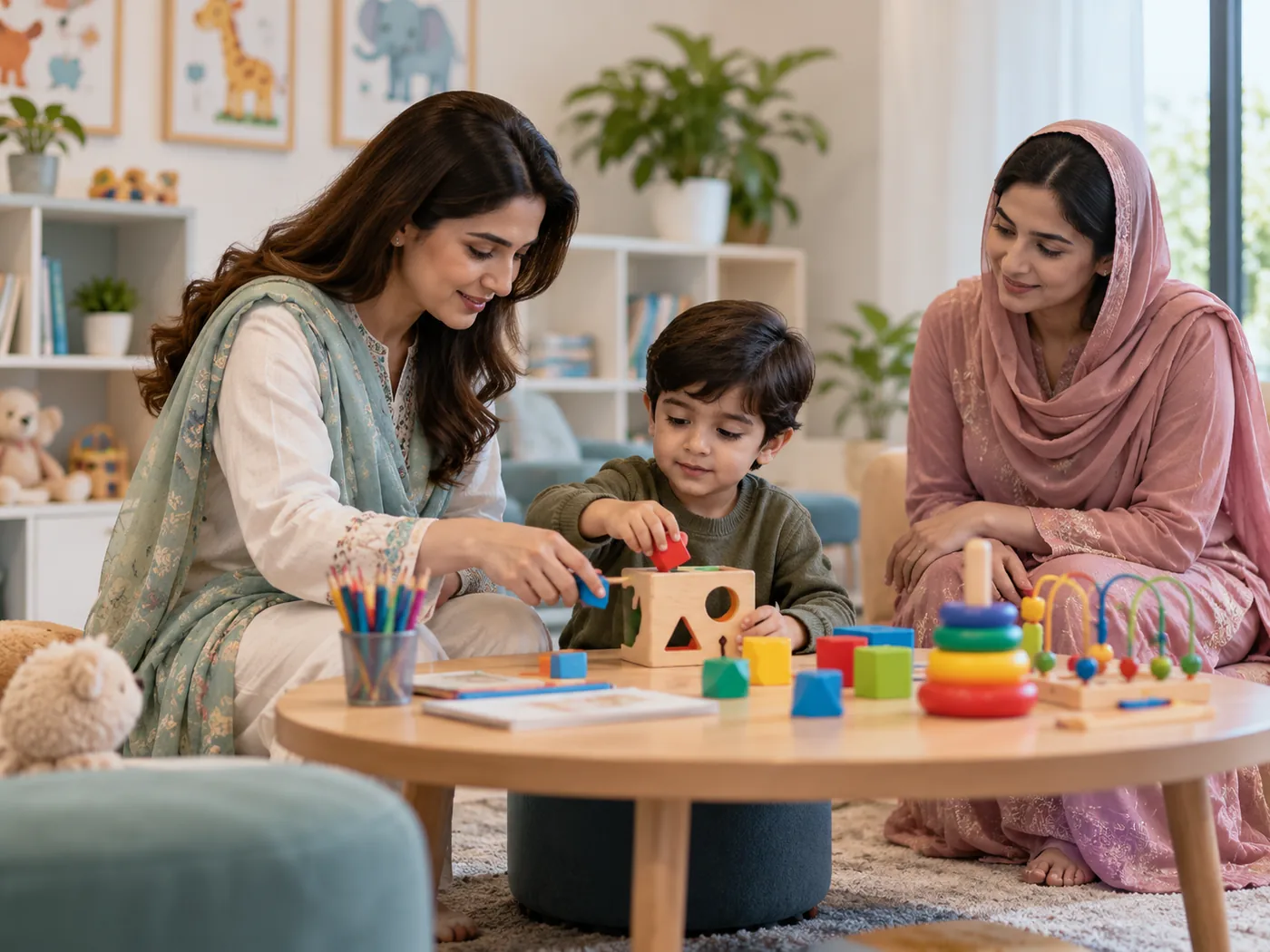
Children & Adolescents
Developmental guidance, emotional support, behavioural assessment, neurodevelopmental concerns and parent consultation.

Adults
Support for stress, difficult emotions, trauma-related concerns, life transitions, relationships and personal growth.

Families & Relationships
Parent guidance, family communication, relationship concerns, boundaries and caregiver support.

Schools & Workplaces
Awareness programs, staff and educator guidance, organizational consultation and community wellbeing initiatives.
What makes the center different.
Not a slogan. Six practical standards that shape how Rafaa Center presents, plans and delivers psychological and developmental support.
Defined professional roles
Clinical psychology, child and neurodevelopmental work, speech-language support, management and external legal advisory are presented as distinct responsibilities.
Assessment before assumptions
When assessment is relevant, it helps clarify patterns, strengths, difficulties and context before the next step is decided.
Development-aware care
Children and adolescents are considered in relation to developmental stage, family environment, school demands, behaviour and communication.
Family-aware support
Where appropriate, caregiver guidance, communication and relationship context are part of the support system.
Privacy and boundaries
Confidentiality, respectful communication and professional scope are treated seriously.
Connected to the community
Rafaa’s work also reaches schools, workplaces and community settings through awareness, workshops and wellbeing initiatives.
Professional care should not rely on shortcuts.
A trustworthy center is not defined only by what it offers. It should also be clear about the limits of responsible psychological practice.
No one-size-fits-all plan
A child, an adult and a family may arrive with the same broad concern but need different assessment, goals and support.
No guaranteed outcome claims
Psychological and developmental care is not presented as an instant cure or guaranteed result.
No blurred professional roles
Management, legal advisory and clinical responsibilities are not treated as interchangeable credentials.
No forcing a concern into the wrong service
If another professional, emergency pathway or referral is more appropriate, responsible care means recognizing that limit.
Meet the people behind the care.
Trust is easier when roles are visible. Rafaa separates treating professionals from organizational leadership and external advisory support, so families can understand who is responsible for what.

Bushra Zaffar
Clinical Psychologist & FounderMS Clinical Psychology (Gold Medalist). Listed areas include trauma and stress, anxiety and depression, OCD and neurodevelopmental conditions.

Muhammad Behroz Khan
Clinical PsychologistMS Clinical Psychology. Listed areas include anxiety, depression, stress, burnout, trauma, emotional regulation and relationships.

Areeda Amjad
Clinical PsychologistChild and neurodevelopmental focus including assessment, ADHD, autism, learning concerns, parent guidance and play therapy.

Shiza Anum
Speech & Language Pathologist · Clinical PsychologistSpeech, language, fluency, pragmatic communication, autism communication, feeding/swallowing and voice concerns.
Important to the center, but not presented as treating-clinician credentials.

Muhammad Adnan
Managing Director & Co-FounderGraduate in Applied Psychology. Leads organizational direction and development; not presented as a treating clinician.

Faheem Akhtar
Advocate High Court · External Legal AdvisorLLB, Punjab Bar Council Licence No. 107108. Supports legal and regulatory matters; not presented as a clinical practitioner.
The concern should lead to the right professional area.
These examples show how Rafaa’s published expertise connects to common areas of concern. Current clinician availability should be confirmed with the center.
Adult anxiety, stress, trauma & emotional regulation
Psychological support around mood, stress, burnout, trauma-related concerns and coping.
Trauma, OCD & adolescent emotional concerns
Trauma-informed work and psychological support for obsessive-compulsive and adolescent concerns.
ADHD, autism & child neurodevelopmental concerns
Assessment, developmental understanding, parent guidance, school concerns and child-focused support.
Speech, language, fluency & communication
Support for speech-sound, language, fluency, pragmatic communication, feeding/swallowing and voice concerns.
What parents notice first. What we look at next.
A concern is a starting point, not a diagnosis. At Rafaa Center, the first step is to understand what has changed, how old the child is, and what daily life looks like at home and school. The team can discuss relevant support or recommend further evaluation when needed.
Speech delay or difficulty being understood
Discuss words, gestures, understanding, hearing and communication across settings. A speech-language evaluation may be appropriate.
Attention, concentration or learning concerns
Look at sleep, the classroom, developmental history and daily functioning before deciding whether an ADHD or learning assessment is needed.
Social communication or autism-related questions
Understand play, interaction, routines, language and strengths. Any screening concern should be followed by an appropriate professional evaluation.
Tantrums, worry or difficult emotions
Explore triggers, transitions, developmental stage and caregiver responses. Support may include child-focused guidance and practical parenting strategies.
Why this matters: two children can show similar behaviour for very different reasons. There is no useful shortcut to understanding the child.
Discuss a child's concernA child's needs rarely fit into one neat label.
For families seeking child psychology and developmental support in Bahawalpur, concerns can begin with speech, attention, learning, routines, social communication or behaviour. The same sign can have different explanations. Listening to caregivers and understanding a child’s age, environment and daily functioning help identify a sensible next step.
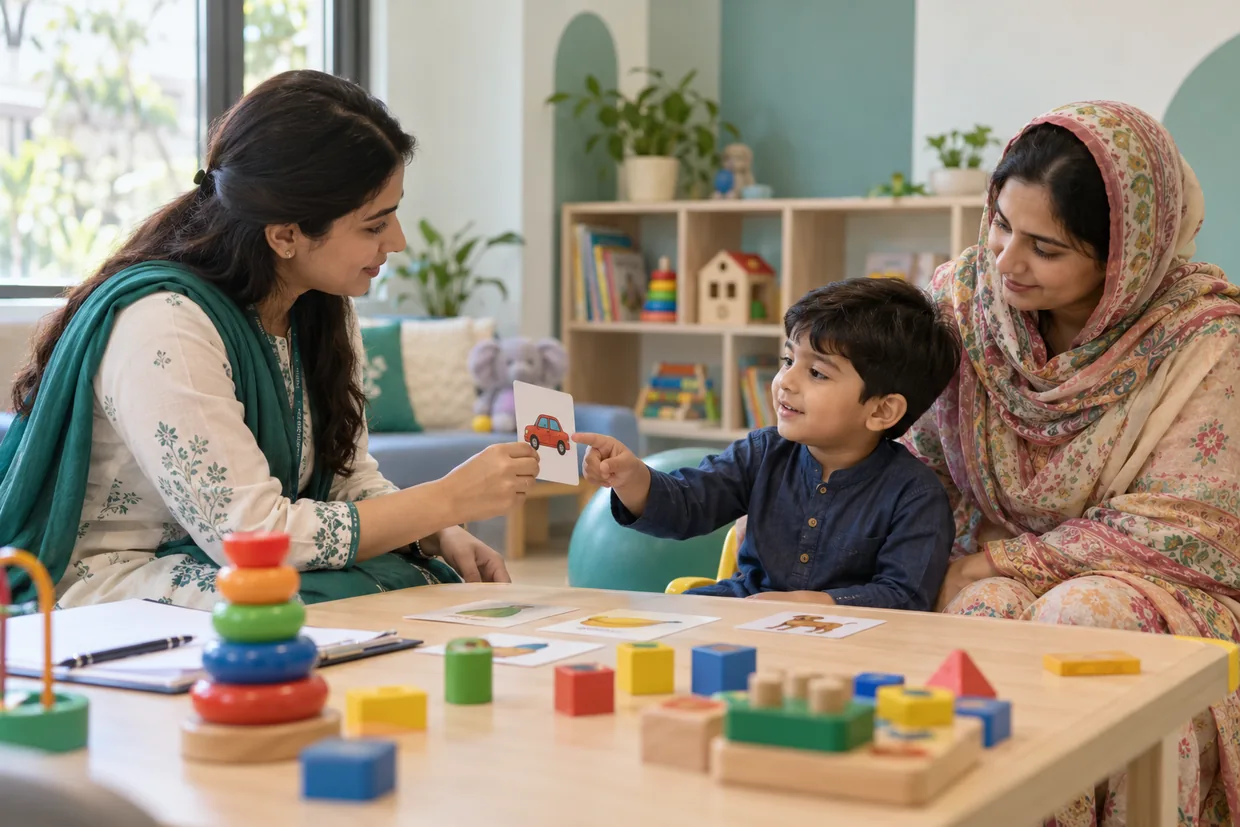
Listen to the concern
What are caregivers or teachers noticing, and where does it affect the child?
Look at the whole picture
Developmental history, strengths, communication, home and school context may all matter.
Discuss suitable support
The direction might involve parent guidance, a psychological assessment, speech-language support or another referral.
Concerns about autism, ADHD or speech delay deserve individual assessment. A webpage cannot diagnose a child.
Explore child and adolescent servicesWhen a child struggles to communicate, the details matter.
Speech delay in children is not always just about the number of words they use. Understanding instructions, using gestures, putting sounds together and communicating with other people are different pieces of the picture.
Listen to caregivers. What is the child able to say, understand and express at home?
Look at communication skills. Speech clarity, language understanding, play and social communication can guide appropriate assessment.
Choose the right next step. Discuss speech-language support, family strategies and hearing or medical referral when indicated.
The child's needs and age determine whether assessment, therapy or another referral is appropriate.

Not just “bad behaviour.” A question worth understanding.
When children become withdrawn, overwhelmed or easily upset, a useful conversation looks beyond discipline. The goal is to understand the circumstances and find realistic support for the child and caregivers.
Patterns and triggers
When does it happen? Are routines, school demands, sensory experiences, family stress or sleep affecting the child?
Development and emotions
What can the child communicate? Do expectations match their age, abilities and circumstances?
Practical guidance
Where suitable, work on emotional regulation, predictable routines, caregiver strategies and appropriate professional follow-up.
Rafaa's role: help families explore the concern with an appropriate professional, not promise a quick fix or assign a label from one symptom.
Explore Child & Teen Services
Understanding the concern changes the next step.
Assessment is not simply about attaching a label. It can help clarify what is happening, how it affects daily life, what strengths are already present and what kind of support may be appropriate.
Our Care Process
From the first conversation to assessment, planning and follow-up, the process is designed to make the next step understandable without treating every person the same way.
Get in Touch
Share who the support is for and the basic concern through phone, WhatsApp, email or the website.
Initial Consultation
The team gathers context and identifies the most relevant service or professional area.
Assess & Plan
Where appropriate, assessment or deeper consultation helps clarify needs and the support direction.
Support & Follow-Up
Ongoing psychological support, guidance or referral continues according to the agreed direction and scope.

Support works better when adults understand the same picture.
Parents notice things that teachers may not, and schools can reveal challenges that do not show up at home. With the family's permission and where appropriate, professional guidance can consider both perspectives.
What responsible care looks like.
Trust is built through how information, families, expectations and professional limits are handled.
Confidentiality
Psychological concerns often involve sensitive personal information. Privacy and respectful handling of information are central to professional support.
- Private concerns discussed through appropriate channels
- Clear communication around family involvement
- Respect for personal information and boundaries
Family Involvement
For children and some family concerns, caregiver involvement can be important. It should have a clear purpose.
- Parent and caregiver guidance where appropriate
- Developmental and behavioural context considered
- Communication aligned with the support plan
Professional Scope
Responsible care includes knowing when a concern needs another professional, emergency pathway or referral outside the center’s scope.
- No guaranteed outcome claims
- Clear clinician and non-clinician roles
- Referral when another pathway is more appropriate
You do not need to arrive with the perfect explanation.
People often delay reaching out because they are unsure what to say or whether the concern is “serious enough.” The first conversation can simply begin with what you have noticed and what you want help understanding.
Bring the concern in your own words
Describe what has changed, what is difficult, how long it has been happening and what you want help understanding.
For children, context helps
Development, behaviour at home, school concerns, communication, routines and caregiver observations may all be relevant.
The first step may be assessment, guidance or support
Not every concern begins with the same service. The next step depends on what the initial discussion and professional assessment indicate.
Ask questions about the plan
It is reasonable to ask who will provide the service, what the goals are, how family involvement works and what follow-up may look like.
Before you book, ask anything.
You do not have to know exactly what type of therapy or assessment you need. Use these questions to decide whether the available service and professional are the right fit.
- ✓Which clinician or specialist is appropriate for this concern?
- ✓What happens during an initial consultation?
- ✓Would an assessment help, and what does it involve?
- ✓How are parents or caregivers included when needed?
- ✓What are the fees, session duration and follow-up arrangements?
- ✓When might another service or referral be more suitable?
Questions like these make it easier to choose support with clarity, not pressure.
Contact Rafaa CenterWellbeing is also shaped by where people live, learn and work.
Rafaa Center’s published service structure extends beyond individual consultation into schools, colleges, workplaces and community settings.
Professional psychological support, here in Bahawalpur.
Rafaa Center is based in Bahawalpur and works with individuals, families, institutions and community groups. For appointments or questions about which service may be suitable, contact the center directly.

A few things worth knowing first.
Exact clinician availability and the most appropriate service for an individual concern should be confirmed directly with Rafaa Center.
Does Rafaa Center only work with children?
No. The center’s published services include children, adolescents, adults, couples, families, schools, workplaces, organizations and community groups.
Who works with child neurodevelopmental concerns?
Areeda Amjad’s approved profile includes neurodevelopmental assessment, ADHD, autism spectrum disorder, intellectual and developmental concerns, learning difficulties, parent guidance and child-focused work. Bushra Zaffar’s profile also lists neurodevelopmental conditions.
Who provides speech and language support?
Shiza Anum is listed as a Speech & Language Pathologist and Clinical Psychologist, with expertise including articulation, language delay, fluency, pragmatic communication, autism-related communication, feeding/swallowing and voice concerns.
How is a clinician chosen?
The center should consider the type of concern, age, context, professional scope and current clinician availability. The clinician examples on this page reflect published areas of expertise, not guaranteed availability.
Can schools or organizations contact Rafaa Center?
Yes. Rafaa’s published service structure includes school and college initiatives, workplace wellbeing programs, staff support, organizational consultation, awareness programs and community outreach.
What if the concern needs another kind of care?
Professional scope matters. When a concern requires a different specialist, emergency pathway or another form of care, referral or another appropriate next step may be necessary.