
Psychomotor Therapy and Movement-Based Child Development in Bahawalpur
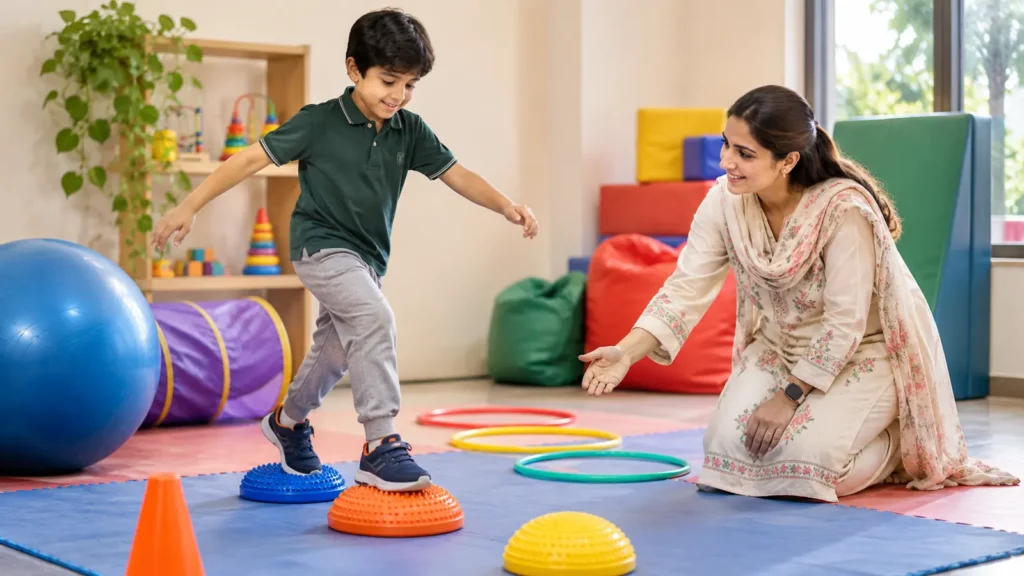
Understanding how movement, confidence and emotional wellbeing connect.
Children learn about their world by moving, playing, exploring and interacting with others. When coordination, balance, body awareness or emotional regulation is challenging, movement-focused activities may form part of a wider support plan. At Rafaa Center in Bahawalpur, our child psychology and neurodevelopmental team can discuss developmental concerns and guide families toward an appropriate assessment or qualified movement-based specialist. Rafaa Center provides developmental assessment and family guidance for movement and coordination-related concerns.
Movement is more than physical exercise.
A child's sense of their body can shape play, confidence and participation.
Psychomotor therapy is a body-oriented approach that explores connections between movement, emotions, awareness and development. Depending on professional training and the child’s needs, sessions may include balancing games, movement planning, relaxation, coordination tasks or guided play. For a child who finds words difficult, movement and play may provide another way to engage. But a motor difficulty should not automatically be described as a psychological problem. Clinicians consider the child’s medical, physical, developmental and emotional needs together. At Rafaa Center, child-focused psychological and neurodevelopmental assessment is among available services. Rafaa Center develops child-centred support plans and coordinates the professional care suited to each developmental concern.

Signs of coordination or movement-related difficulties.
Each child develops at an individual pace. Concerns that persist, interfere with participation or lead to distress deserve an appropriate professional assessment, not a diagnosis based on a short list.
Balance and coordination
Frequent difficulty with climbing, jumping, balancing or learning motor activities expected for the child’s age.
Motor planning
Struggling to learn a sequence of movements such as navigating obstacles, skipping or coordinating several actions.
Fine-motor tasks
Difficulty with drawing, buttons, utensils or classroom tasks requiring controlled hand movements.
Body awareness
Challenges judging body position or navigating spaces comfortably, especially during play and movement.
Frustration during movement
Avoiding physical games or becoming upset when motor activities feel difficult compared with peers.
Developmental differences
Coordination concerns alongside ADHD, autism-related needs or other developmental differences that may warrant wider assessment.
Psychomotor therapy, occupational therapy and physiotherapy are not identical.
Psychomotor therapy focuses on the relationship between movement, body experience and psychological or developmental functioning. Professional qualifications, techniques and regulation can differ by country. Occupational therapy may address participation in everyday tasks such as dressing, handwriting, play and school activities, with approaches chosen according to functional goals and clinical assessment. Paediatric physiotherapy assesses and manages physical movement and motor difficulties, often including balance, strength, movement patterns and functional motor participation. Child psychology can explore emotional, behavioural and developmental concerns, identify when more specialist evaluation is necessary, and support families with coping and communication. A child with possible developmental coordination disorder (DCD) may require a qualified physical or occupational therapy assessment and a multidisciplinary approach. Rafaa’s child assessment service can provide an initial discussion about developmental concerns and appropriate onward referral.
When a simple game feels unexpectedly difficult.
Supporting the child matters more than rushing the activity.
Imagine a child who wants to join a playground game but finds balancing and changing direction difficult. They fall behind, feel embarrassed and eventually stop joining in. Another child may enjoy physical play but struggle to organise the movements needed to complete a new task. A thoughtful assessment asks what the child can already do, what situations are difficult, and how those experiences are affecting confidence and participation. Developmental activities might be part of support, but treatment should be chosen according to the actual difficulty, not the appearance of an attractive exercise. For some children, task-specific motor practice guided by a qualified physiotherapist or occupational therapist is more appropriate than a broad movement programme. Family participation, realistic goals and progress reviews also matter.
Developmental questions worth discussing.
Families may ask about developmental and psychological assessment when a child’s movement difficulties interact with confidence, participation, daily activities or emotional wellbeing.
How are movement and developmental concerns assessed?
1. Understand the child’s history. A clinician first considers developmental milestones, current motor activities, family observations, health history and difficulties at home or school. Recent injuries, pain, loss of previously acquired skills or neurological symptoms need appropriate medical review. 2. Observe everyday functioning. The child’s confidence, movement participation, play, attention and social-emotional context may be considered. Proper motor testing should be performed by a qualified professional using suitable methods. 3. Select appropriate specialist input. Depending on the concern, a paediatric physiotherapist, occupational therapist, developmental paediatrician, psychologist or another qualified professional may be needed. Different professionals assess different aspects of movement and development. 4. Plan relevant goals. If a movement-based intervention is recommended, goals should relate to practical tasks such as playground participation, dressing, handwriting, coordination or other activities meaningful to the child. 5. Review progress. The family and appropriate clinicians can review changes in everyday functioning and decide whether the plan needs adjustment.
Movement activities that may support individual goals.
Movement and play-based activities are selected around each child’s developmental goals, comfort and functional needs.
Balance and coordination play
Walking across safe stepping stones, catching or rolling a ball and practising graded movement challenges.
Motor planning activities
Navigating a short obstacle course or organising a sequence of actions adapted to the child’s abilities.
Body awareness and regulation
Simple movement, breathing or grounding activities where appropriate to support comfort and emotional awareness.
Practical everyday skills
Practising relevant motor tasks with input from qualified physical or occupational therapy professionals.
A clear pathway for discussing child movement concerns.
Rafaa Center explores developmental concerns through child psychology and neurodevelopmental assessment. The clinician develops a coordinated support plan based on the child’s developmental needs.
Share your concerns
01 · CONNECT
Describe the child’s age, developmental history, coordination difficulties and where these affect everyday life.
Discuss developmental needs
02 · UNDERSTAND
Our child psychology professionals assess emotional, behavioural and developmental needs.
Confirm the right specialist
03 · REFER IF NEEDED
The team identifies suitable movement and developmental support according to the child’s assessment.
Plan suitable follow-up
04 · REVIEW
Work with the relevant professional to set achievable functional goals and review progress over time.
Begin with Rafaa Center’s child psychology professional.
Areeda Amjad is the child and neurodevelopmental clinical psychologist at Rafaa Center. Her clinical work includes child psychological and developmental assessment. She supports children and families with developmental and behavioural assessment, psychological care and practical guidance. Contact Rafaa Center to book a child development consultation.

Areeda Amjad
Clinical Psychologist · Child & Neurodevelopment
Clinical psychologist working with child developmental, emotional and behavioural concerns and caregiver guidance. Provides guidance for families with developmental and coordination concerns.
Questions about psychomotor therapy and child development in Bahawalpur.
Straightforward guidance about coordination difficulties, developmental assessment and the appropriate specialist.
What is psychomotor therapy for children?
Psychomotor therapy is a body-based approach that uses movement, play and body awareness to explore developmental and emotional functioning. The specific methods and qualifications of providers vary, so a child should be assessed by an appropriately trained professional.
Does Rafaa Center have a psychomotor therapist in Bahawalpur?
Rafaa Center’s child psychology team supports developmental, emotional and behavioural assessment and guidance. Our team helps families develop an individual support plan and coordinate specialist care when needed.
Is psychomotor therapy the same as occupational therapy?
No. Occupational therapy concentrates on participation in everyday activities and functional skills. Psychomotor therapy uses movement in relation to broader body awareness and psychological or developmental experiences. Training and professional roles differ.
What does a psychomotor therapy session look like?
Depending on the child’s needs and a professional assessment, a session may use safe balance games, movement planning, sensorimotor activities or structured play. No single activity is appropriate for every child.
Can movement-based interventions help a child with autism?
Some children with autism may benefit from appropriately adapted movement or motor skills interventions when these match their goals. Autism itself does not automatically mean a child needs psychomotor therapy. A qualified assessment is important.
What about ADHD and movement activities?
Movement can be part of healthy activity and support for some children, but structured motor activities are not a stand-alone treatment for ADHD. Psychological, educational and medical needs should be considered individually.
Does my child need therapy for poor coordination?
Persistent motor difficulties that affect daily tasks, school, play or confidence may warrant evaluation by a paediatric physiotherapist, occupational therapist or other relevant professional. A child psychologist can help explore related emotional or developmental concerns.
What is developmental coordination disorder (DCD)?
Developmental coordination disorder is a neurodevelopmental condition involving significant motor coordination difficulties that affect everyday activities. Diagnosis requires a qualified assessment and consideration of other possible explanations.
Can a child with motor difficulties also have emotional distress?
Yes. Difficulty joining games, completing tasks or keeping up with peers can affect confidence and wellbeing. Psychological support may address the child’s emotional experience while appropriate movement specialists assess physical needs.
Can parents practise movement activities at home?
Play and everyday physical activity can be valuable, but therapeutic exercises should match the child’s abilities and safety needs. A qualified professional can explain activities appropriate for the child and any precautions.
When should movement difficulties receive urgent medical attention?
Sudden weakness, loss of balance, new difficulty walking, severe pain, a serious injury or loss of previously acquired motor skills requires prompt medical assessment. A routine psychology appointment is not an emergency service.
How can I ask Rafaa Center about child movement support?
Contact Rafaa Center through rafaacenter.com/contact-us/ or call/WhatsApp +92 311 4522233. The centre is at House No. 5, Street No. 4, Muhammadiye Colony, Bahawalpur.
Concerned about coordination?
Ask about assessment and suitable support.