
Anger Management at Rafaa Center in Bahawalpur
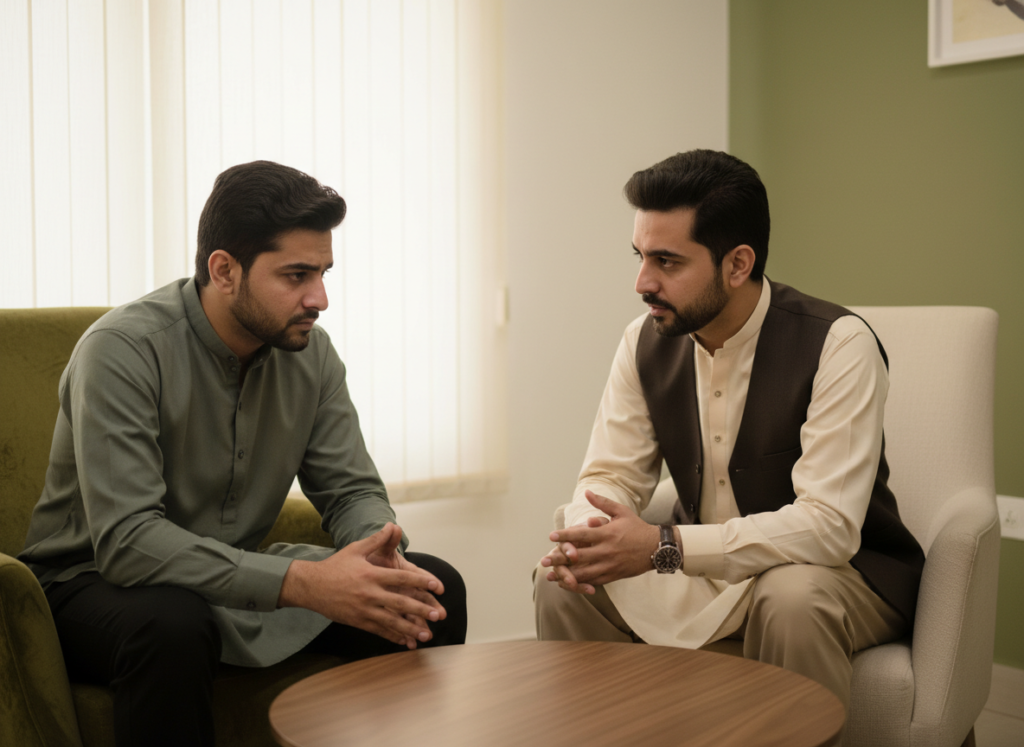
Anger is an emotion. Your response is something you can work on.
Small disagreements turning into shouting, regret or long silence? Rafaa Center provides anger management counselling to help adults recognise triggers, manage strong emotions and respond without harming relationships. Our clinical psychologists begin by understanding your everyday situations and goals.
When anger takes over
Repeated reactions can affect work, family and wellbeing.
Anger can show up as irritability, tense arguments, withdrawal or physical arousal. Stress, painful experiences, exhaustion and other emotional concerns may add to the difficulty. In counselling, we review what happens before, during and after an angry response, then discuss CBT-informed coping, emotion regulation and communication practice. Stress and anxiety support may be relevant when concerns overlap.

When anger needs attention
These experiences are reasons to discuss support, not a diagnosis.
Arguments escalate
Small disagreements quickly turn into shouting or blame.
Regret after reacting
You say things you later wish you had handled differently.
Frequent irritability
Minor setbacks often feel overwhelming.
Silent withdrawal
You avoid resolving conflict by shutting down.
Physical warning signs
A racing heart, clenched jaw or tense body comes with anger.
Relationship strain
Family or colleagues feel affected by repeated reactions.
Hard to calm down
Anger continues long after the situation has passed.
Worried about control
You fear acting in an intimidating or unsafe way.
What fuels a strong reaction?
Feeling criticised, powerless or unheard can spark anger. Longer-term stress, trauma, sleep problems or learned communication habits may make it harder to pause. A psychologist helps identify the thoughts, body signals and circumstances that keep the pattern going. Where appropriate, trauma-related support can be explored.
One comment, a difficult evening
A different response can change how a conversation unfolds.
Imagine arriving home tired and hearing an ordinary question as criticism. You snap, the argument grows and later regret what happened. Counselling helps you examine the moment between feeling threatened and reacting, and practise safer ways to express frustration. This is an illustrative situation, not a patient story.
For adults facing recurring conflict
Counselling may help when anger affects relationships, work or everyday decisions. Goals can include reducing arguments, expressing needs calmly and noticing escalation sooner. Couples counselling may be a separate option for mutual relationship concerns; individual anger work never replaces safety measures for abusive behaviour.
How anger counselling works
Identify patterns. Discuss triggers, thoughts, physical signs and effects on daily life.
Learn regulation skills. Practise recognising escalation, grounding and making space before responding.
Change unhelpful responses. Explore assumptions, CBT-informed alternatives and non-threatening ways to express needs.
Apply it to daily life. Use communication and boundary skills, then review successes and difficulties between sessions.
Consider related concerns. Where anxiety, depression or trauma is present, the psychologist may recommend additional assessment or referral.
From first session to next steps
Support is tailored to your concerns and adjusted together.
Talk through the concern
01 · CONSULT
Share what happens and what you would like to change.
Understand the pattern
02 · ASSESS
Explore triggers, stress and other emotional factors.
Practise practical skills
03 · PLAN
Work on regulation, communication and different responses.
Review together
04 · REVIEW
Adjust strategies around real-life progress.
Meet Muhammad Behroz Khan
Muhammad Behroz Khan supports adults with emotional regulation, stress and related psychological concerns. Sessions are guided by assessment and practical goals.

Muhammad Behroz Khan
Clinical Psychologist
Muhammad Behroz Khan supports adults with emotional regulation, stress and related psychological concerns. Sessions are guided by assessment and practical goals.
Common questions
Clear answers before your first consultation.
Is anger a mental illness?
No. Anger is a normal emotion. Repeated harmful reactions or distress may be a reason to seek support.
What happens in anger management counselling?
A psychologist explores triggers and patterns, then helps you practise coping and communication strategies.
Can therapy help with shouting?
Counselling can help you recognise escalation and choose less harmful responses. Results vary.
Is CBT used for anger?
CBT-informed strategies may help examine thinking patterns and practise new responses when clinically appropriate.
Why do small things make me angry?
Stress, exhaustion, feeling criticised and other emotional difficulties may contribute. Assessment helps clarify your situation.
Will a psychologist judge me?
Counselling should be respectful. You can ask about confidentiality and its safety-related limits.
Does breathing alone solve anger?
Breathing may reduce physical arousal, but communication and behavioural patterns often need attention too.
Can anger affect relationships?
Yes. Recurring shouting, withdrawal or arguments can strain trust and everyday communication.
How many sessions are needed?
The plan depends on severity, goals and progress. A fixed number cannot be promised in advance.
What if I may hurt somebody?
Prioritise safety, move away from the situation where possible and seek urgent local medical or emergency help.
Where can I book anger management counselling in Bahawalpur?
Contact Rafaa Center at +92 311 4522233 or book a consultation.
Choose a calmer response
Start with a confidential conversation.
Discuss recurring anger, conflict and practical regulation skills with a clinical psychologist.