
Oppositional Defiant Disorder (ODD) Therapy for Children in Bahawalpur

Behind repeated conflict, there may be a child who needs understanding and support.
Frequent arguments, angry outbursts and difficulty following rules can leave families exhausted. But every child who says “no” does not have Oppositional Defiant Disorder (ODD). At Rafaa Center in Bahawalpur, our child psychology services can help families understand persistent behavioural concerns, consider emotional and developmental factors, and explore age-appropriate parent and child support. When a formal diagnosis or additional medical evaluation is needed, appropriate specialist referral may be recommended.
There is a difference between normal defiance and ongoing distress.
A child's behaviour makes more sense when we explore the pattern and context.
Children naturally test limits, disagree with adults and have difficult days. Oppositional Defiant Disorder describes a more persistent pattern of angry or irritable mood, argumentative or defiant behaviour, or vindictiveness that exceeds developmental expectations and affects relationships or daily functioning. Clinical assessment considers symptom frequency, severity, duration and the child’s age; ODD criteria include a pattern lasting at least six months.
The same behaviour may have different causes. Anxiety, ADHD, learning or language difficulties, trauma, stress, sleep problems and strained relationships can all influence how a child responds. Professionals should explore these possibilities rather than automatically treating the child as deliberately difficult.
At Rafaa Center, Areeda Amjad is a Clinical Psychologist working with child and neurodevelopmental concerns, emotional and behavioural difficulties and caregiver guidance. Families can ask about a child psychological consultation and the most appropriate intervention or referral.
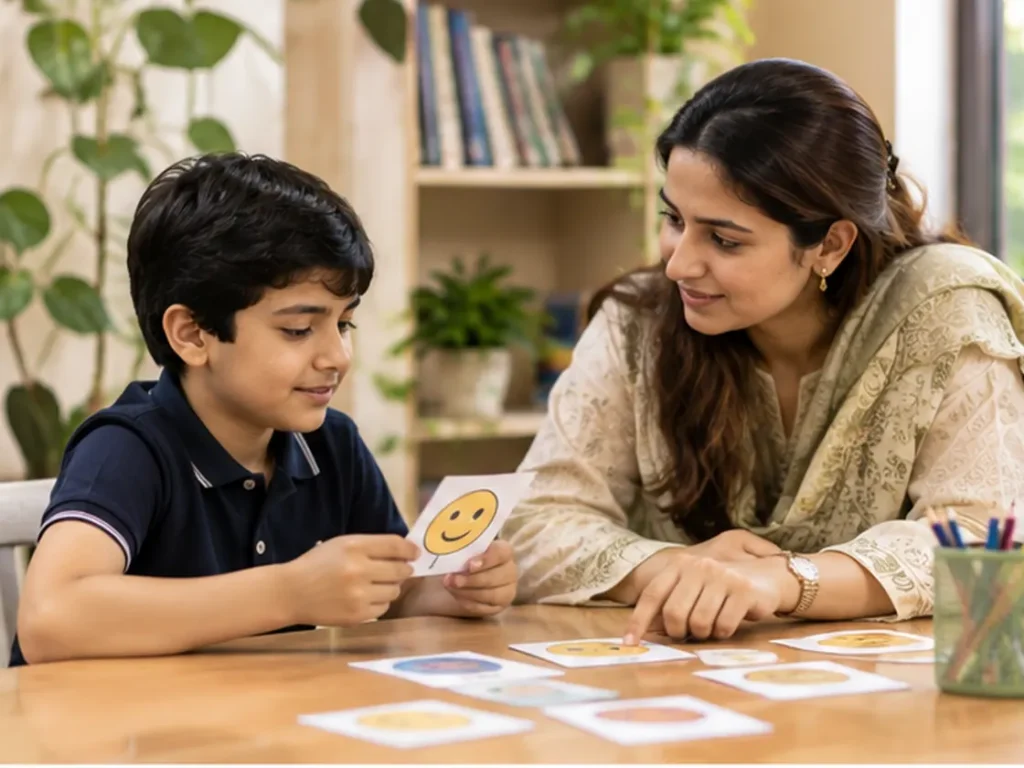
ODD-related behaviours parents and teachers may notice.
These are possible concerns, not proof of ODD. Behaviour should be interpreted in context, especially when the child is tired, distressed, neurodivergent or struggling with communication.
Frequent angry outbursts
Repeated frustration or intense anger beyond what is usually expected for the child’s age or circumstances.
Persistent arguing
Ongoing conflict with parents, teachers or other authority figures across familiar situations.
Resisting everyday requests
A pattern of refusing or challenging rules, rather than a single incident of disagreement.
Easily feeling annoyed
Becoming irritated quickly or feeling that others are being unfair or deliberately upsetting.
Blaming or resentment
Regularly blaming others for mistakes or holding onto anger and resentment.
Impact on everyday life
Strain on family relationships, classroom participation or friendships that continues over time.
Why a careful child psychological assessment matters.
Age and developmental stage: A young child’s tantrum or refusal may be part of development. Persistent behaviours that clearly exceed expectations and impair functioning need a closer look.
Home, school and social context: A clinician asks when difficulties occur, what happens beforehand, how adults respond and whether the pattern appears in more than one setting.
Emotional and communication needs: Children with anxiety, speech or language challenges, learning differences or overwhelming stress may struggle to express what they need.
Co-occurring difficulties: ADHD, anxiety, depression, trauma-related concerns and learning difficulties may require their own evaluation. Correctly identifying these factors can change the treatment plan.
Safety and dignity: Support should avoid humiliation, harsh physical discipline and shaming labels. The goal is better emotional regulation and relationships, not suppressing every disagreement.
When every small request turns into an argument.
Changing the interaction can be more useful than raising your voice.
A parent asks their child to stop playing and get ready for homework. The child refuses. The parent repeats the request more loudly, the child argues back, and within minutes both are angry. By the end of the evening, neither feels understood.
A child psychologist may explore whether the task feels too difficult, the transition is sudden, the child feels overwhelmed or there is a repeated pattern of conflict. Parent guidance might include giving clear, realistic instructions, preparing for transitions, reinforcing cooperative behaviour and handling disagreements without escalation.
The aim is not to excuse unsafe behaviour or remove all boundaries. It is to support predictable limits while strengthening trust, communication and problem-solving. Families can also read about our Child & Adolescent Psychology Services for broader emotional and behavioural concerns.
Support when persistent conflict affects home or school.
Families do not need a confirmed ODD diagnosis to enquire. A qualified psychologist can assess concerns and recommend suitable support or specialist referral.
What approaches can help children with ODD-related difficulties?
Parent Management Training (PMT): Evidence supports structured parent-focused behavioural interventions for persistent oppositional behaviour. With a suitably trained provider, caregivers learn practical ways to give clear requests, reinforce helpful behaviours and respond consistently to conflict. Rafaa Center’s clinical team helps families develop practical, individualised behaviour support strategies.
Collaborative problem-solving: A child and caregiver may practise understanding difficult situations, naming concerns and working towards realistic solutions together. This approach can be adapted to age and skills.
Age-appropriate child therapy: Depending on the assessment, psychological work may include emotion identification, frustration tolerance, coping and problem-solving skills, including CBT-informed or play-based approaches where suitable.
Family communication: Sessions may explore patterns of escalation, repair after disagreements, supportive boundaries and ways to avoid shame or harsh punishment.
School cooperation: With appropriate consent, parents and clinicians can discuss relevant classroom triggers, predictable expectations and supportive behaviour plans with school staff.
Additional assessment or referral: ADHD, anxiety, learning or developmental difficulties may need further evaluation. If medication is considered for a co-occurring condition, only an appropriately qualified medical prescriber can assess or provide it. ODD itself has no medication that specifically cures the condition, and Medication for associated conditions is assessed by an appropriate medical specialist. For a specialist parent resource, read the AACAP guidance on oppositional defiant disorder.
The focus is better functioning, not perfect obedience.
Goals are individual and should be agreed after assessment, with age-appropriate expectations and respect for the child’s needs.
Clearer communication
Reducing repeated arguments by using calm requests, listening and mutually understood expectations.
Positive behaviour support
Recognising cooperative steps and building consistent, realistic boundaries without physical punishment.
Emotional coping skills
Helping children notice frustration and practise safer ways to express anger or ask for a break.
Home and school consistency
Coordinating practical strategies where appropriate so the child receives predictable support.
How behavioural consultations may work at Rafaa Center.
Therapy begins with understanding the child’s behaviour, developmental needs and family environment.
Understand the family's concerns
01 · LISTEN
Discuss behaviour patterns, triggers, duration, family routines, school experiences, developmental history and strengths.
Explore the broader picture
02 · ASSESS
The psychologist considers age, emotional concerns, relationships, co-occurring conditions and whether further specialist assessment is indicated.
Plan practical support
03 · SUPPORT
Agree on age-appropriate caregiver guidance, child-focused psychological strategies or referrals where needed.
Review what is changing
04 · ADAPT
Monitor everyday behaviour, communication and relationships and adjust the support plan collaboratively.
Meet the professional supporting children and their families.
Areeda Amjad is Rafaa Center’s Clinical Psychologist for child and neurodevelopmental concerns. Her work includes emotional and behavioural concerns, parent guidance, CBT and play-based therapy. Our approach emphasises practical parent coaching, healthy boundaries and emotional regulation.

Areeda Amjad
Clinical Psychologist · Child & Neurodevelopment
Child clinical psychologist experienced in developmental, emotional and behavioural concerns, child-focused psychological assessment and caregiver guidance.
Questions about ODD therapy and child behaviour in Bahawalpur.
Practical answers about defiance, assessment, parent-focused treatment, co-occurring conditions and family support.
Where can I ask about ODD therapy for children in Bahawalpur?
Rafaa Center offers child psychological assessment and parent guidance in Bahawalpur. Rafaa Center supports families with child behaviour assessment, parent guidance and individualised psychological therapy.
Is ODD the same as normal naughty behaviour?
No. Disagreement and testing boundaries can be typical during development. ODD involves a persistent and impairing pattern of angry or irritable mood, argumentative or defiant behaviour, or vindictiveness beyond developmental expectations.
Does every argumentative child have ODD?
No. Frustration, stress, learning difficulties, communication needs and normal developmental changes may explain some behaviour. Assessment considers frequency, duration, context and impact on functioning.
How long must ODD symptoms last?
Diagnostic criteria consider an ongoing pattern lasting at least six months, with frequency and severity judged against the child’s age and developmental stage. A qualified clinician must evaluate the full picture.
Can ODD occur alongside ADHD?
Yes. ADHD and ODD-related patterns may occur together, and anxiety, mood or learning difficulties can also be relevant. A comprehensive assessment helps identify which needs require attention.
Can anxiety or trauma look like defiant behaviour?
Yes. Fear, overwhelm, stress or past difficult experiences may lead to refusal, anger or avoidance. An assessment should consider these possibilities rather than assume deliberate disobedience.
Is Parent Management Training useful for ODD?
Structured parent management approaches are among the best-supported treatments for persistent oppositional behaviour. The treatment plan is selected after a thorough assessment of the child’s needs and family circumstances.
What does therapy for ODD involve?
Support may include parent coaching, family communication work, child-focused coping and problem-solving skills and school collaboration, tailored to the child’s age and individual assessment.
Do parents attend sessions?
Parents and caregivers are often closely involved because everyday family interactions are an important part of behavioural support. The exact format varies with the child’s age, needs and chosen intervention.
Can psychological therapy help children manage anger?
Age-appropriate therapy may teach children to recognise emotions, notice triggers, tolerate frustration and practise safer communication, alongside caregiver strategies and environmental support.
Should teachers be involved?
Where appropriate and with consent, school information and consistent support plans can help professionals understand behaviour across settings and reduce contradictory expectations.
Is ODD treated with medication?
There is no medication specifically approved to cure ODD. Medication may be considered by an appropriately qualified physician for certain co-occurring conditions such as ADHD or significant mood symptoms. Medication decisions are handled through appropriate medical care.
Can ODD improve with support?
Many families can improve communication, behavioural functioning and relationships with appropriately tailored intervention. Progress varies and may require sustained parent involvement and review.
When should a family seek urgent help?
If a child is at immediate risk of harming themselves or others, is experiencing severe aggression, or safety cannot be maintained, seek emergency medical or crisis assistance rather than waiting for a routine consultation.
How do I book a child psychology appointment at Rafaa Center?
Call or WhatsApp +92 311 4522233 or visit rafaacenter.com/contact-us/. Address: House No. 5, Street No. 4, Muhammadiye Colony, Bahawalpur. Contact Rafaa Center to book a child psychology consultation.
Build calmer connections.
Ask about child behaviour support.